Visiting the Great Barrier Reef with kids – what parents need to know before booking is something I’ve helped out hundreds of families figure out – usually while standing on a marina dock with a cold cup of coffee in front of me and the kids already eyeing the water.
To be honest, the simple answer is that yes, you can most definitely take kids to the reef – and in many cases, it’s one of the highlights of their childhood – but you’ve got to make sure the experience is right for their age, how comfortable they are in the water and how well they cope with a boat trip.
I’ve seen six-year-olds with wide eyes floating on top of coral gardens spotting turtles, and I’ve also seen toddlers who’ve decided halfway through a rough crossing that this was definitely the worst idea their parents ever had.
The reef is pretty magical – but only if you get the organisation just right – which is where most people go wrong.
So let’s go through exactly how to do that – without making your tropical dream day turn into a logistical nightmare.
Contents
- 1 Start With Choosing The Right Style Of Reef Day
- 2 Offshore Platforms Are A Good Choice For Kids
- 3 Island-Based Reef Time Suits Younger Kids
- 4 What Kids Actually See Under The Water
- 5 Snorkelling, Helmet Diving And First-Time Scuba
- 6 Timing Can Make Or Break The Day
- 7 Add Aerial Perspective For Context
- 8 Beyond The Water: Rainforest Adventures For Balance
- 9 Costs: What To Expect When Booking
- 10 What Parents Get Wrong
- 11 Reef Conservation Conversations Matter
- 12 Southern And Lesser-Known Options
- 13 Bringing It All Together
- 14 Final Thoughts from Paul
- 15 FAQ
Start With Choosing The Right Style Of Reef Day
The Great Barrier Reef is a huge stretch – about 2,300 km along Queensland’s coast, and it covers an area of roughly 344,400 square km.
This means one family’s experience can differ significantly from another’s.
You’re not booking “the reef” – you’re booking a specific location, boat and type of trip.
Families usually choose between:
- Offshore reef platforms in deeper water
- Smaller reef boats that visit a few different sites
- Island-based snorkelling closer to shore
Most of the operators we feature through Great Barrier Reef Tours will give you a clear idea of how long the trip will take, so make sure you pay attention to that – an extra 30 minutes at sea can feel like an eternity if the sea gets rough.
Offshore Platforms Are A Good Choice For Kids
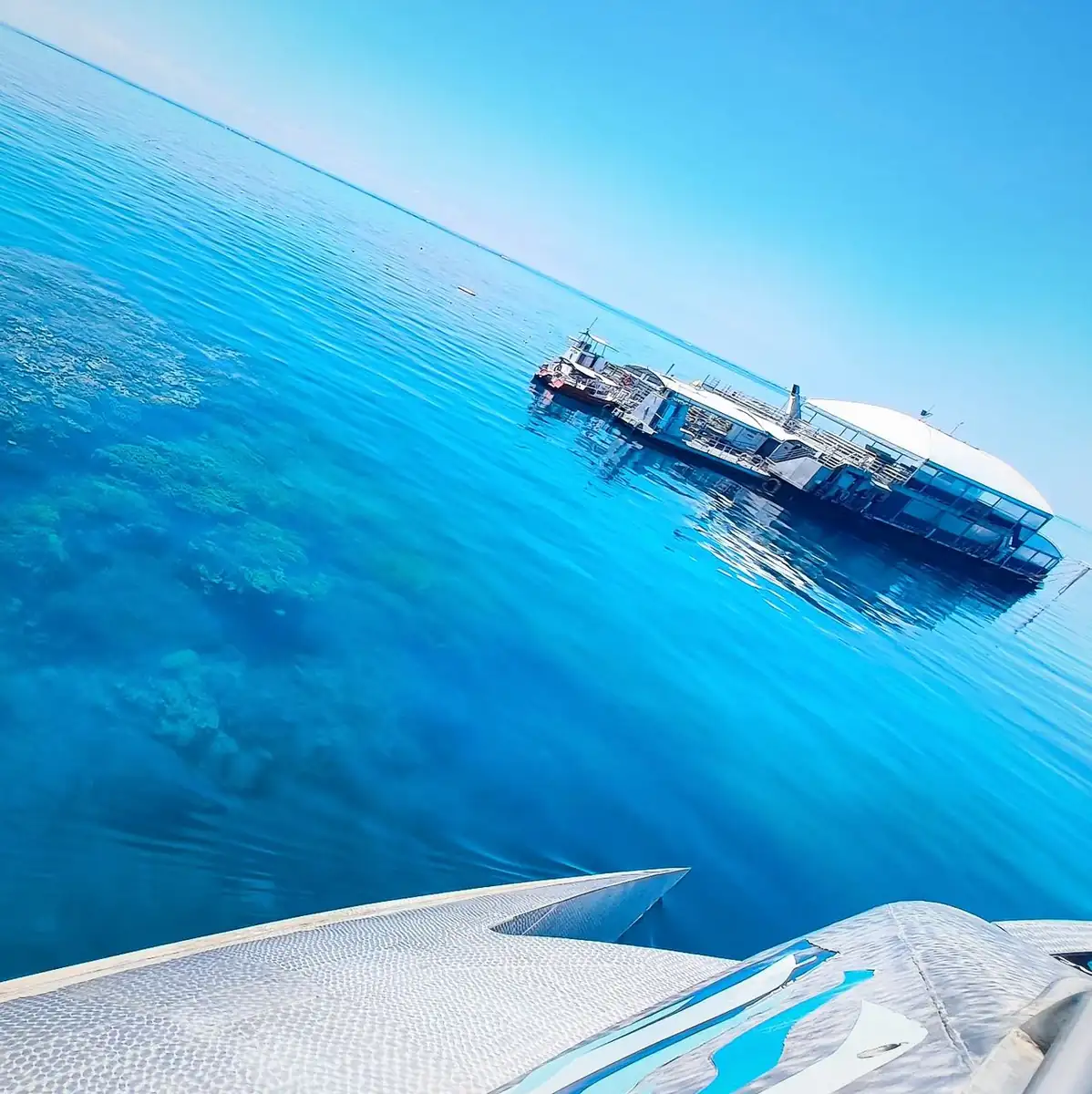
Large pontoons at locations such as Moore Reef or Agincourt Reef provide a floating base in the Coral Sea.
These platforms typically offer ample shade, easy access to and from the water, underwater observatories, glass-bottom boat rides, and semi-submersible tours.
For kids aged 5 to 10, this setup works really well.
They can ease into the water, climb back on the boat quickly if needed and retreat to the shade.
The crew will provide snorkelling vests and extra buoyancy aids, and explain everything clearly and simply.
If you’re flying into Cairns, most boats leave from Marlin Marina.
If you’re staying at the Shangri-La or Pullman International, you can walk to the dock, making getting up early much easier.
Island-Based Reef Time Suits Younger Kids
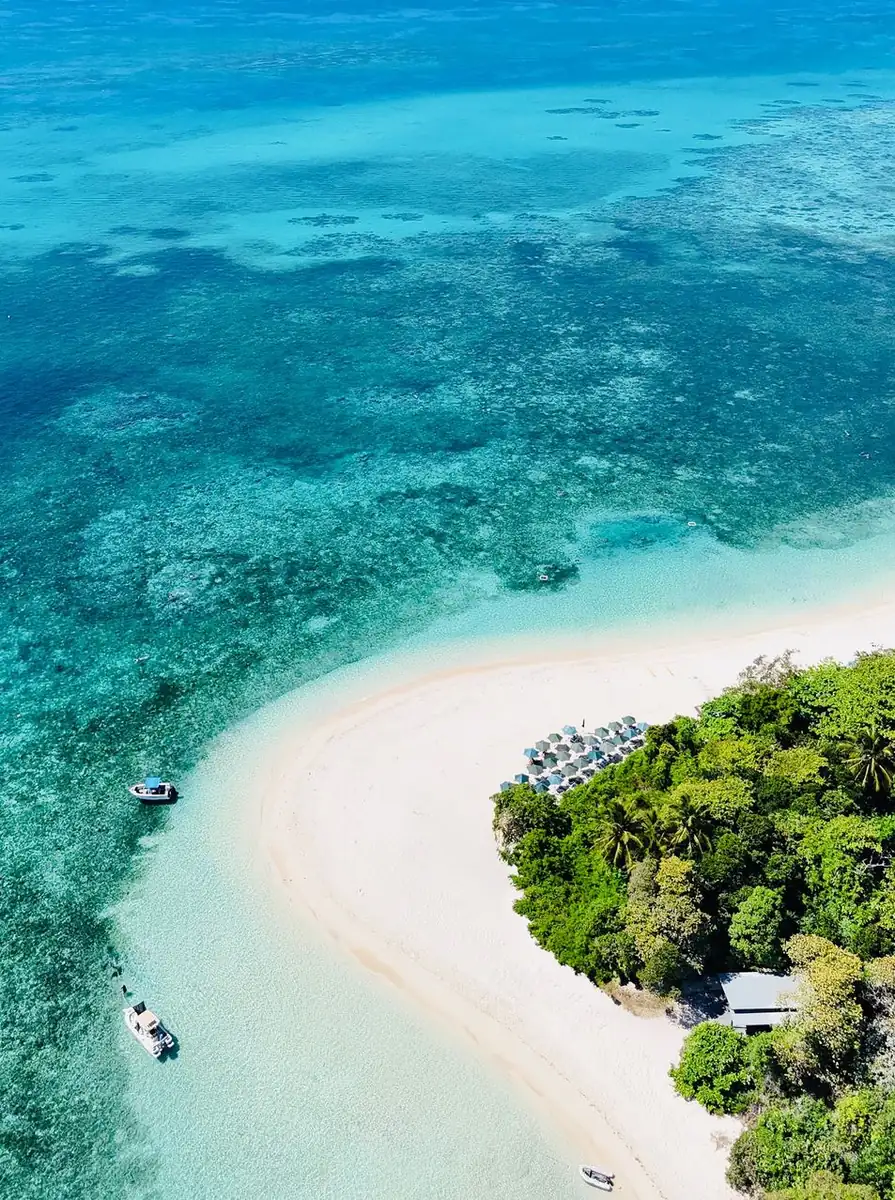
If you have young children under six, or they’re not yet confident in the water, Green Island, Fitzroy Island, or the Low Isles near Port Douglas are probably the best options.
These areas have shallower waters and calmer conditions that you can just wade right into from the beach.
You won’t get the same level of coral as you would out on the reef system, but you do get a lot more control.
You can take a break, grab a snack, get your bearings again and head back in when you’re ready to give it another go.
Lots of families who are combining island time with a stay in the Whitsundays near Airlie Beach or Hamilton Island also like to fit in Whitehaven Beach – it’s a great way to balance the structured snorkelling with just having the freedom to swim and play in the sand.
What Kids Actually See Under The Water
Parents often have this idea that it’s all going to be endless scenes of wildlife.
But to be honest, it’s a bit more complicated than that – and that’s actually part of the charm.
On a good day, your kids might spot:
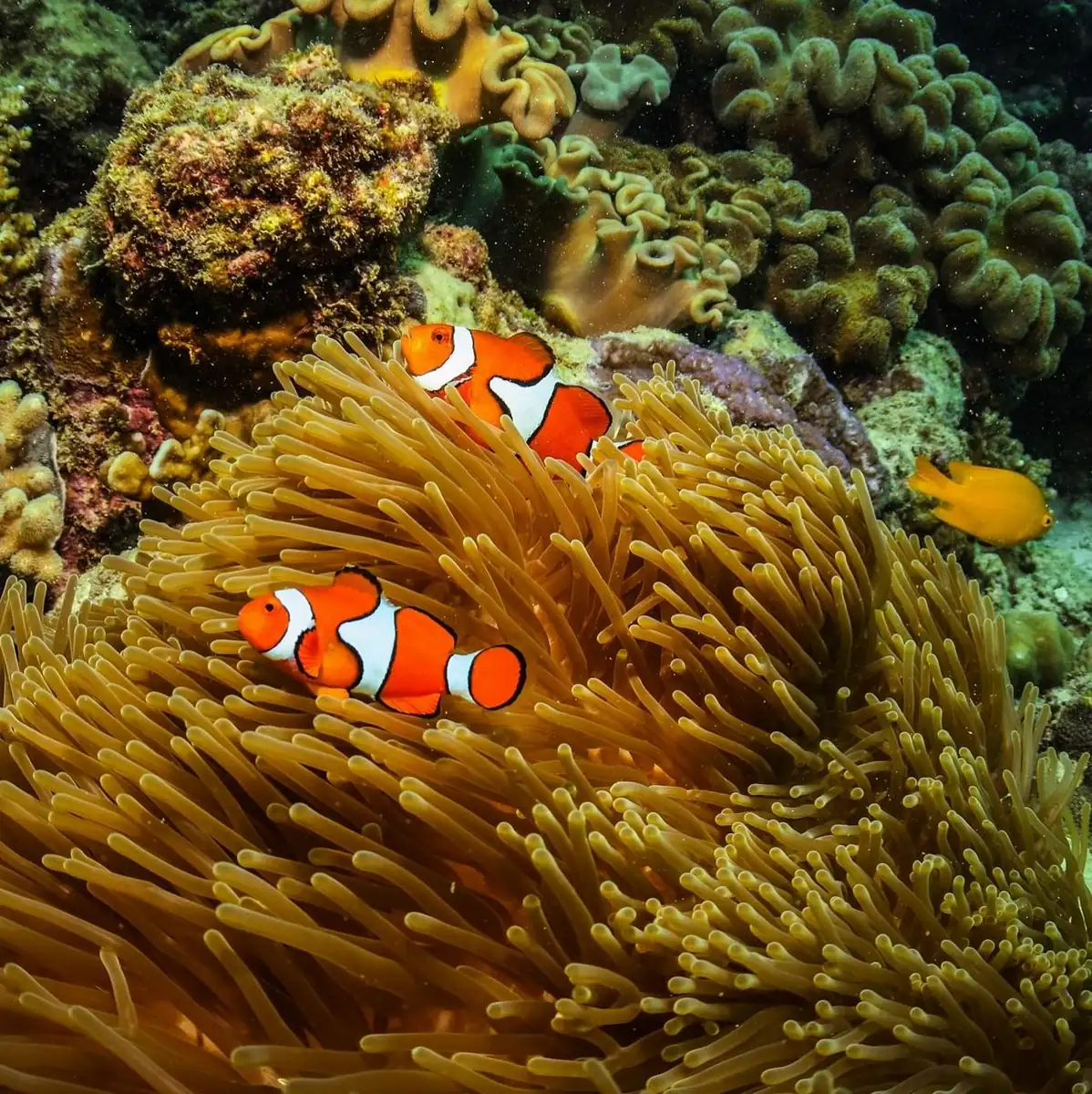
- Brightly coloured fish darting in and out of the coral reefs
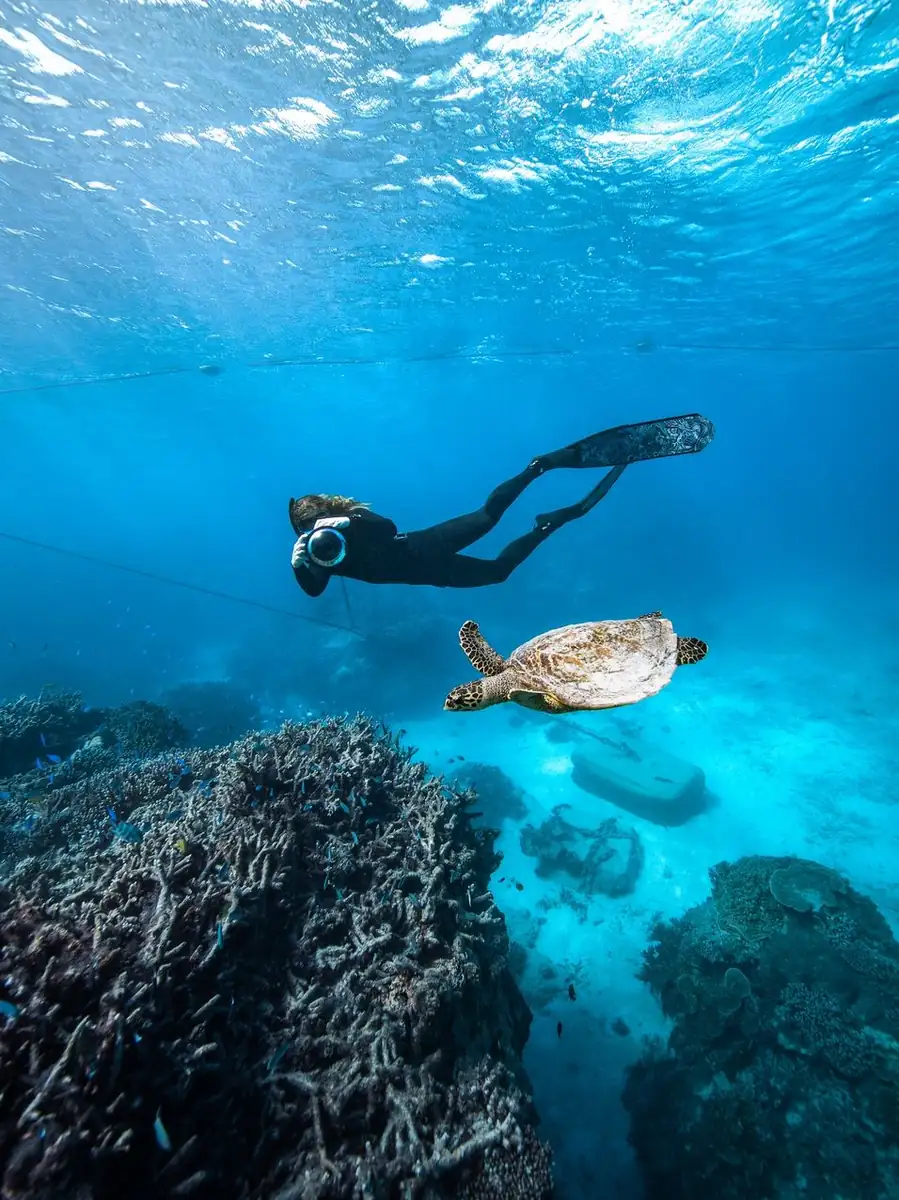
- The occasional sea turtle coming up for air
- A reef shark cruising about down deep
- Some massive clams and some pretty impressive coral bommies
Depending on the time of year, they might even be lucky enough to see manta rays, dwarf minke whales up north, or even humpback whales on their migratory route.
Sea temperature ranges from about 23 degrees in winter to 29 degrees in summer.
And during marine stinger season, the operators will usually provide you with some protective gear to stop you getting stung by Irukandji jellyfish and other species.
Just be sure to pay attention to the safety briefing – it’s really worth listening to.
Snorkelling, Helmet Diving And First-Time Scuba
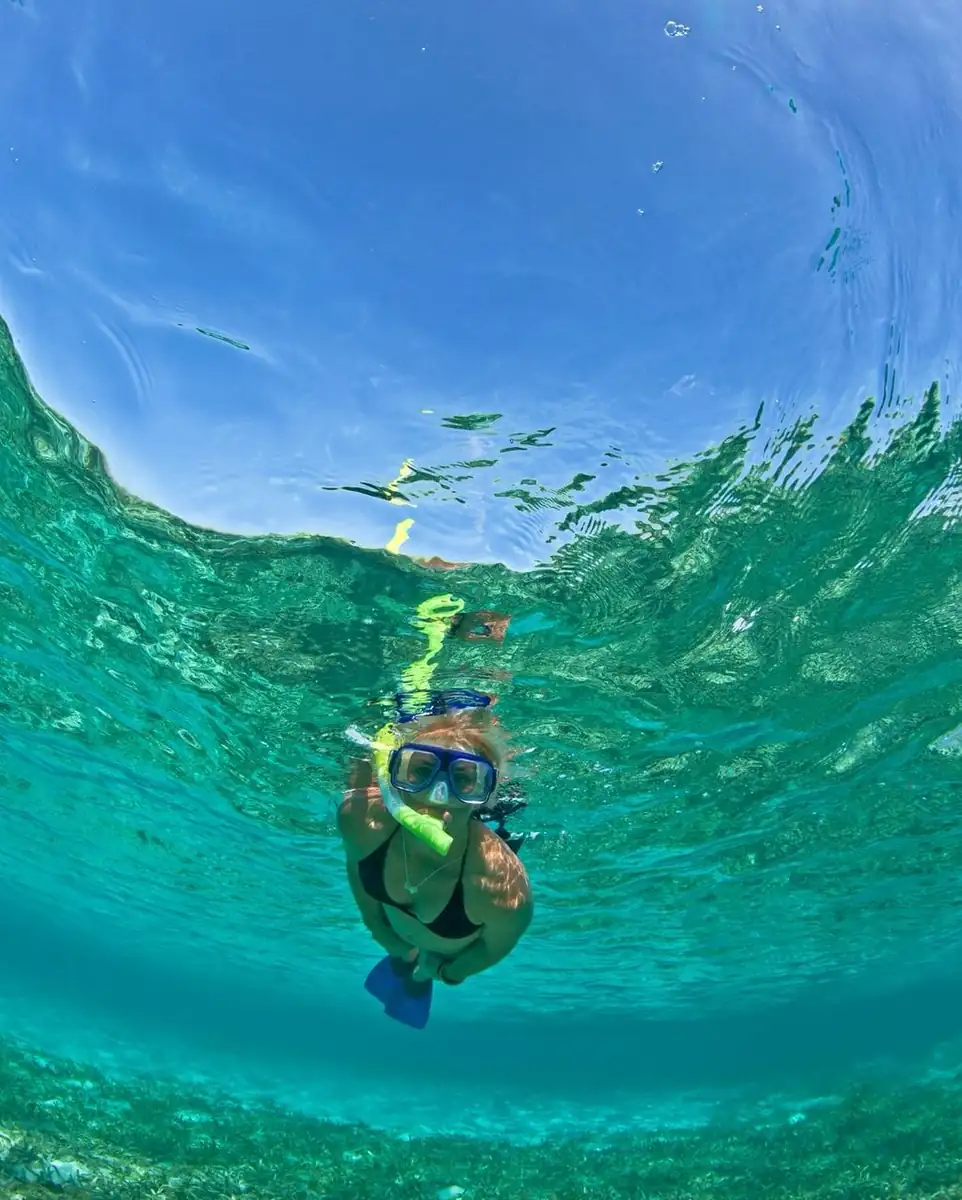
Most kids start off with snorkelling.
The crew will give you all the gear you need – snorkel sets, snorkel vests and a bit of guidance from a snorkel guide.
Just keep the sessions short – 20 minutes or so is plenty, then you can take a break and warm up before heading back in.
Older children (12 or older) can typically participate in a supervised scuba dive.
Introductory programs allow them to take an initial dive without requiring a full qualification.
If they’re already certified, they can continue exploring other sites, such as Norman Reef, Hastings Reef, or Agincourt Reef.
Some of the pontoons offer helmet diving too, where you just walk down a ladder and put on a big air-supplied helmet.
It’s well-controlled and relatively calm.
If you’re a dive family and you’re keen on going liveaboard on a boat like Mike Ball, then you can get to some of the deeper locations like Cod Hole.
But to be fair, that’s usually more suited to older teens and adults rather than primary school kids.
Timing Can Make Or Break The Day
The dry season from May to October is usually the best time to go, with calmer seas and clearer skies.
However, the wet season from November to April can be more challenging, with higher humidity, increased storm activity, and a higher risk of marine stingers.
Let me be blunt with you – if your kid struggles with car travel, then don’t gamble on rough sea forecasts.
Check the marine reports before you lock in any dates.
Seas can change pretty quickly in the Coral Sea, so what looks like a smooth trip out to the reef doesn’t necessarily mean the same on the way back.
Add Aerial Perspective For Context
A helicopter flight over the reef is a real game-changer for kids – it gives them a proper understanding of just how massive it is.
Those coral sand cays, such as Michaelmas Cay, appear as delicate brushstrokes against the bright blue of the water from above.
Short helicopter flights out of Cairns will give you a glimpse of the patterns that are just not visible when you’re down at sea level (although to be honest, it’s not strictly necessary – but it’s an experience that’s almost impossible to forget).
Beyond The Water: Rainforest Adventures For Balance
When it comes to a family holiday, finding the right balance is essential.
Many families do a reef day and then head inland to visit Kuranda Village via the Kuranda Skyrail or the train.
It’s a great way to add contrast to your trip by visiting an ancient forest.
Alternatively, you can tack on a Rainforest Skywalk & Glow Worm Caves Day Trip to see a whole different side of the state – with the marine life and the rainforest.
Spacing out the reef and the rainforest days helps manage the energy levels and keeps everyone safe in the sun.
Costs: What To Expect When Booking
A reef day with the family (four of you) is likely to cost anything between $700 to $1,100, depending on who you go with and what you get.
Add extras such as helmet diving or a first scuba dive, and the price will increase slightly.
Some operators may offer a family discount, but be sure to ask about lunch, wetsuits, and all the gear you’ll need.
It’s not the cheapest thing to do – I mean, you could get a good reef experience in other parts of the world for less money.
But the thing is that in Queensland we’ve got high safety regulations and some really well-structured experiences – you know what you’re getting, so that’s a big plus.
What Parents Get Wrong
Over the years, I’ve seen that the problems usually boil down to simple oversights.
Parents often underestimate how intense the tropical sun can be and forget to prepare children for motion sickness.
We also see kids and parents throwing themselves into the boat and expecting to go straight into full-on snorkelling mode – but it’s just not realistic – they’re only going to last for 20 minutes before they get tired.
Pack some rash shirts, ensure your kids are always hydrated, and take time to rest if needed.
Don’t rush them into the water – let them ease in at their own pace.
Reef Conservation Conversations Matter
Our reef is under a lot of pressure from shifts in the weather and coral bleaching – but it’s great to see that many reef operators are now starting to give a bit of a marine biology briefing on board to explain what’s going on.
You’re also more likely to find a marine biologist on some boats now (or at least a brief presentation).
Get the kids to steer clear of the coral, not touch the fragile bit and show some respect for the marine life – that way they’ll get a lot more out of the experience and it will stick with them a lot longer than any textbook could.
Southern And Lesser-Known Options
Some families are after a more relaxed reef experience, and they might look to Lady Musgrave or the Frankland Islands – they’re definitely worth a look.
But they do require a bit more planning to visit, and it’s worth the effort, as you’ll see far fewer other visitors.
When it comes to smaller boats, you can certainly reduce the crowds, but you might get tossed about in the water a fair bit – it’s a trade-off, really.
Bringing It All Together

Can families make this work?
Absolutely, they can.
If stability is key, choose a platform.
If you need to get on and off the boat easily, choose island access.
Also, consider Great Barrier Reef Tours, which can help you compare options and book at your convenience.
Add some balance on land, such as a Rainforest Skywalk & Glow Worm Caves Day Tour, between your marine days.
Always monitor the sea forecast and pack smart.
And most importantly, respect the marine life around you.
When a kid comes up out of the water whooping with excitement about seeing a turtle in the clear water, it makes all the effort worth it
Final Thoughts from Paul
Take your time when choosing.
Don’t rush it.
The reef is massive, living and utterly unpredictable in a way that’s just fantastic.
Plan it right and your kids won’t just remember a boat ride – they’ll remember floating above a coral garden in one of the most incredible marine environments on the planet.
And that’s really worth spending the time to get right
FAQ
Is it safe for younger kids offshore?
Yes, when you use a licensed operator and have a controlled snorkelling area with flotation aids and proper supervision.
What if my child refuses to snorkel?
If your kid doesn’t want to get in the water, there are plenty of options like glass-bottom boat tours or semi-submersible tours that let you see the reef without ever getting wet.
Are stingers a risk?
Marine stingers are seasonal, but the operators do provide Lycra suits to protect you, and they keep an eye on conditions every day.
Can Teens try diving?
Most introductory scuba programs start at 12, under supervision, of course.
Does coral bleaching mean there’s nothing to see?
No, it’s not that simple. The health of the coral varies by spot and from one year to the next. At the right spots, particularly out in the outer reef, there are still loads to see.